
The Magazine for the Teachers of Astronomy


Get the first three years of The Classroom Astronomer on CD.


Click the box cover for more information.


Get sneak peaks and between-issue updates by Liking us on our Facebook page! 

Tell someone about The Classroom Astronomer!

SEND A TCA POSTCARD TO SOMEONE!
All these photos are UNIQUELY found here!


Click on the Photo!
NEW PRODUCT ANNOUNCEMENTS
Hermograph Press'
Spectrum Viewers


Elements, Mixtures and Molecules


     "One of the biggest challenges that I have faced when using other spectrum viewers is that the students never know what they are supposed to see and struggle to hold their viewers at the correct angle to the light source. The Classroom Astronomer Spectrum Viewers alleviate both of these issues and provide a simple but effective classroom instruction tool. I find these viewers to be much more useful and easier to
use than models I have used in the past." -
upcoming NSTA "Science Teacher" review.

Indoor and Outdoor Lighting


Read by astronomy educators in the United States and 15 other countries.  Join our Universe!

The Classroom Astronomer is a quarterly PDF publication designed as a practitioner journal for classroom teachers of astronomy. While centered at the high school level, it also provides tips, techniques and informative how-to articles for teachers of grades K-8 and undergraduate college "Astro 101" courses. Our mission is to increase the amount of astronomy in the school systems and improve the skills of teachers.


Table of Contents

Six Steps To Build Up Student STEMina - If at first you don’t succeed, you’re  doing well! Design Buggies for Mars as an elementary (or higher!) science activity and give students mental strength. Using this six-step engineering design pedagogy, which includes testing and improving failed designs, this nine-project plan, NASA's BEST, bridges astronomy, engineering, and critical thinking skills

What Would Galileo Do?  A Curriculum Approach - Design a course around Galileo’s discoveries, and his creation of the scientific method.


The Classroom Tablet, or How I Learned to Love Apple in My Astronomy Class - What can you do as a teacher in the classroom with an Apple iPad?  For one thing, you can recover from a lack of an interactive Smart Board and do live, graphic demonstrations.  Here are some teaching tips for the teacher, on whiteboarding, Moon phasing, 3-D views of the universe, planets and sky, and even some physics, on a tablet device.

Columns:

Astronomy of the Northern Sky - The Brightnesses of Stars - The apparent brightness, or magnitude, of a star is much more precise today than when Hipparchus created the system.  How well can you judge brightness?  This issue's column looks at the system, showing you stars of exactly whole magnitudes, stars with differences of one or more magnitudes, and tenths of a magnitude (how close a difference can YOU detect?), atmospheric extinction and light pollution measures, and finally measuring the magnitudes of stars that vary, with star charts and a test photo to practice on.

Astronomical Teachniques  - The Jig-sawed H-R Diagram; What Kinds of Facts Are There Really?

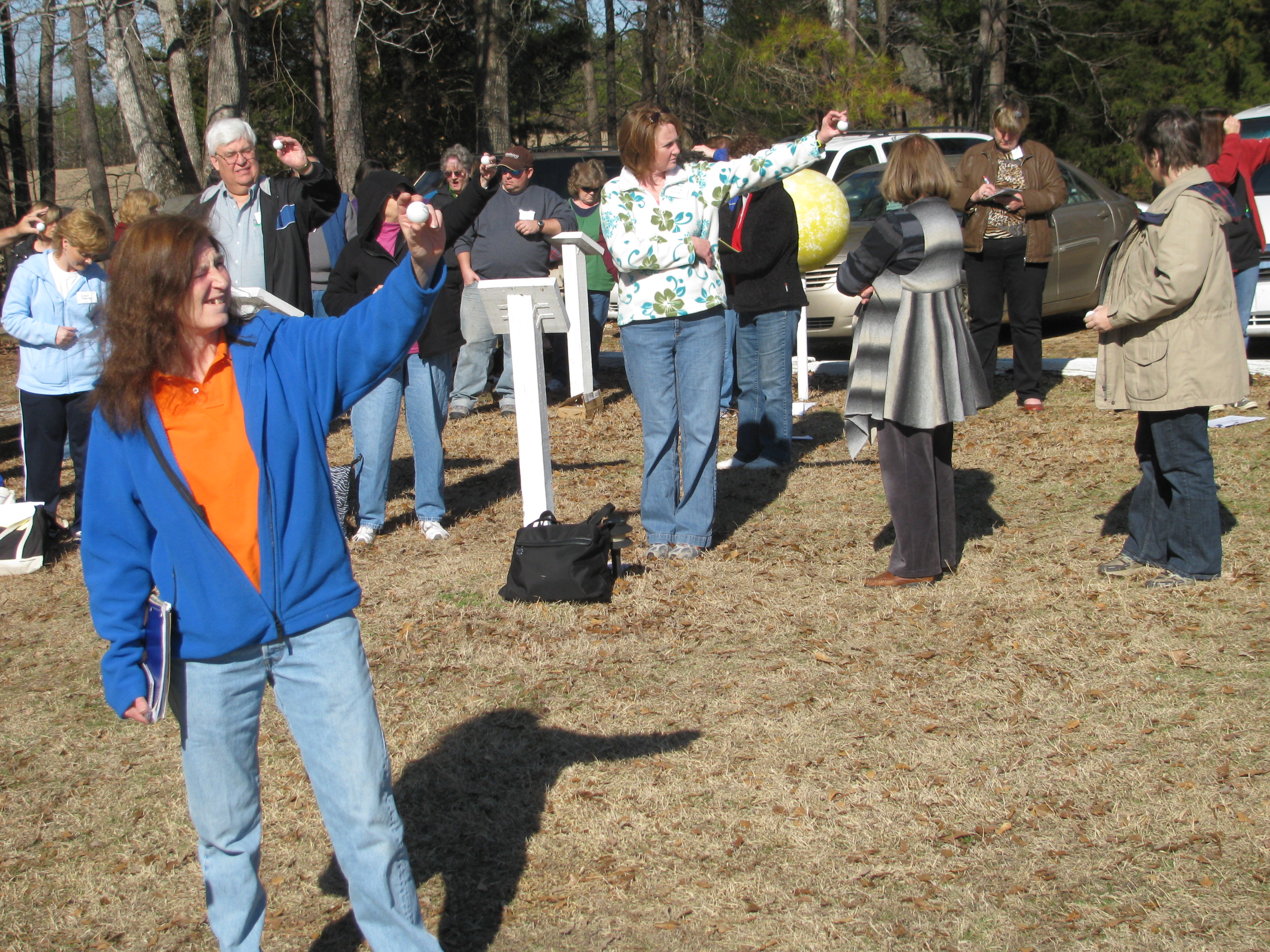
Photons Focused On - Stonehenge, A Teaching Tool?l  - A photo story  showing highlights of Stonehenge and a proposed exercise, setting up the Station Stones in your schoolyard to monitor the northernmost and southernmost Sun and Moon rising points.


and

Teachers' Spring Planning Sky Calendar {click here! }


wordle of
                                                    TCA15 article text


NEXT ISSUE!
Astronomy at 35,000 feet--Flying the Infrared Telescope Jet SOFIA

What's the Correct Order for Teaching Astronomy Topics

and more....

Plus our regular columns:

Astronomy of the North Sky - Coordinates X. Y and Z

The Summer Sky Planning Calendar
for including sky events in your lesson plans.


Astronomical Teachniques


Why Subscribe?

"...(TCA) is notable for its infectious enthusiasm.  Give this unpretentious journal a chance." -  Magazines for Libraries

Your magazine will be a good resource both for me, and for the B. Ed. students who are taking the elementary science course...Well-done! - Terry Bridger, Queen’s University, Canada

I just spent my lunch hour reading through it, and it's a lot of fun with some good classroom ideas ready to go. - Colin Jagoe, Kawartha Pine Ridge, District School Board, Canada

I have just subscribed to your magazine and have read the fall issue. What a great concept! What a fantastic resource! Thank you for taking your love of the skies and turning it into something that will help us teachers create a future generation of knowledgable sky observers! - Deborah J. Snow, Perrysburg Jr. High, OH

An impressive mass of interesting material! - Guy Ottewell, Author Astronomical Calendar

To Teach The Stars' Unique Sundial T-shirt!

sundial t shirt

CURRENT MOON

POPULAR ARTICLES
Which Toy Planetarium Would A Teacher Want?

Finding spectra of gas tubes, street lights that cause light pollution, and the Sun with Vernier's SpectroVis

The End of the World!  What? Again? All about the 2012 Nonsense and Educational Activities to Show Why

Using Vernier sensors to monitor light, temperature and sky color during any solar eclipse.


Two Week Calendar for Planning Sky Lessons

Ring It Up!  And Two Comets to Watch!

Jupiter may be brighter but Saturn is now taking the night stage! 
The ringed planet rises at sunset as we start this fortnight.  Its rings are tilted 18 degrees and so really give the impression of the floating ball within a ring.  The planet is at its brightest (and is fairly isolated near no bright stars closeby) as it crosses low across the southern sky all night long.
With the rings at such a tilt (and it will get larger still over the next few years), you can now watch the moon Titan easily in small telescopes make an actual elliptical orbit around the planet.  Try observing it for this period of time and see what its orbital period is (how long it takes to return to the starting position.  In this regard, Titan is the best moon to observe as Jupiter's bright moons all seem to move from side to side, not around, and all the other planets' moons are too dim.

Jupiter still dominates the western sky with its band of starry brothers in Orion, Taurus, the two Dog Stars, Gemini the Twins' Castor and Pollux, and sunlike yellow Capella.  It is moving away from Aldebaran, ruining the 'second eye of the Bull' effect.  But it is moving too slowly eastward to escape being swallowed by the solar glare in early June.ht. 

Venus is shyly peeking out from behind the skirts of that glare.  It first, barely, becomes visible low in the northwestern sky, about 35-45 minutes after sunset, setting quickly.  But in the next fortnight it doesn't set for an hour after the Sun sets.

Comet PanSTARRS is still a good binocular object but it is fading.  At the same time it is heading straight for Polaris.  To find it, you look on line from right side half of the W of Cassiopeia and connected to the peak star in the "roof" of Cepheus, which it will pass almost on top of after May 11th.  Because it is passing UNDER the pole star, it has been circumpolar but riding low over the northern horizon.  Now it is getting into easy viewing position.

Not too far away is Comet Lemmon but you have to look in the dawn sky, not in the evening.  It will be making a straight line parallel to the eastern side of the Square of Pegasus.  On May 6, the crescent Moon will be near by with the comet near the lower left corner of the Great Square.  Look about 1 and a quarter to one and a half hours before sunrise, just as or before twilight starts.  It is about the same brightness as Comet PanSTARRS and, for a while anyway, will be tracking along behind it until it makes a curve to the right.

 
(Next update  ~May 12)

Date Event Moon Mercury Venus Mars Jupiter Saturn
Apr 28
Su
Saturn is at opposition, rises at sunset, visible all night!


29


30


May
1


2


3

 .
\
4


Date Event Moon Mercury Venus Mars Jupiter Saturn
5
Su


6
Crescent Moon is near Comet Lemmon in the morning sky


7


8


9


10
Annular eclipse of the Sun, Australia; partial in Hawaii.


11
Comet Pan-Starrs just about to nip the top of the "house"pattern of Cepheus.


Icon Meaning Icon Meaning Icon Meaning
Moon visible for early evening studies Full Moon Night Moon visible during school hours for study in class
Visible in evening twilight setting at least 45 minutes after sunset Becomes visible, as it gets dark, sets later in the evening Visible  during the evening hours, sets before dawn
Rises or is already up during the evening, visible the rest of the night Visible in pre-dawn skies until sunrise. Visible only in dawn, rising at least 45 minutes before sunrise